Table of Contents
Table of Contents
From Frustration to Fresh-Baked Freedom 💡
When I first gave up gluten, I thought sourdough was gone for good. I remember watching my neighbor in Santa Rosa score her sourdough boule with pride while I stood there munching on a dry rice cracker. It wasn’t fair. But giving up gluten didn’t mean giving up joy. It meant learning a new language of baking—one built on intuition, whole grains, and patience.
After a few disappointing, gummy attempts, I finally cracked the code to gluten-free sourdough bread that actually rises, crackles, and slices like a dream. No gums, no shortcuts, no regrets. Just pure, tangy goodness with a chewy center and crispy crust.
If you’re here, you’re probably searching for that same satisfying bite. You’ve just found it. And I’m honored to guide you.
Why Gluten-Free Sourdough Bread Is Totally Possible 🥖
Let’s get one thing straight: yes, gluten-free sourdough bread is the real deal, and it tastes incredible. No, it doesn’t need wheat. No, it doesn’t require xanthan gum. And no, it won’t taste like cardboard.
The secret lies in understanding what makes sourdough sourdough—and that’s fermentation, not gluten. We use a bubbly gluten-free starter made from brown rice or sorghum. Then, we build structure using psyllium husk, a miracle binder that traps moisture and gives our loaf that signature chew.
You’re not just “substituting.” You’re building something unique.
What Makes It Work 🍞 :
- Active starter = natural leavening
- Whole grain flour mix = deep flavor
- Psyllium husk = binder + hydration control
- Steam baking = golden crust
I get asked often, Can you buy sourdough gluten-free? Sure! But most store-bought options contain additives, preservatives, and gums. Making gluten-free sourdough bread at home means you control the process—and the flavor is just so much better.
📌 Also Try: Sourdough Croissant Bread ; Sourdough Bread Bowl.
Print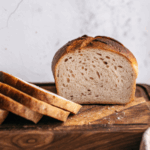
Gluten-Free Sourdough Bread: Tangy, Crusty & 100% Wheat-Free Joy
- Total Time: 1 hour 40 minutes
- Yield: 1 loaf of 12 Slices 1x
- Diet: Gluten Free
Description
Your Go-To Guide for the Best Gluten-Free, Vegan Sourdough Ever
Before you dive in, a quick heads-up on tools:
📏 A kitchen scale is non-negotiable—no volume guessing here.
🥣 I proof my dough in a banneton, but a bowl with a towel works too.
🌀 A stand mixer isn’t required, but it sure makes mixing easier.
You’ll find all my favorite flours and tools linked below the recipe card.
P.S. I recently bumped up the brown rice flour by 15g to fix gumminess—works like a charm!
Ingredients
Preferment:
- 150g active gluten-free sourdough starter, it should be at peak rise and super bubbly
- 100g filtered water
- 80g superfine brown rice flour
Liquids:
- 20g whole psyllium husk, or 16g psyllium husk powder (sift into the water to prevent clumping if using the powder)
- 20g maple syrup or honey
- 300g filtered water (use 270g to 290g if you’re having issues with gumminess)
- 8 to 15g olive oil, optional, helps soften the crust slightly, I recommend the higher amount of flour if you use this
Flour Mix (see Notes for options)
- 80g potato starch, not potato flour!
- 60g tapioca flour or arrowroot flour
- 80g sorghum flour
- 65g to 80g superfine brown rice flour (if you’re having issues with gumminess, use the higher amount of flour; you can also replace this with another whole grain flour, like oat, millet, buckwheat, etc. if you avoid rice flours)
- 12g sea salt
Instructions
- Make the Preferment: Mix 150g active starter, 100g water, and 80g brown rice flour until smooth. Cover and rest at room temp for 4–18 hours—longer = tangier.
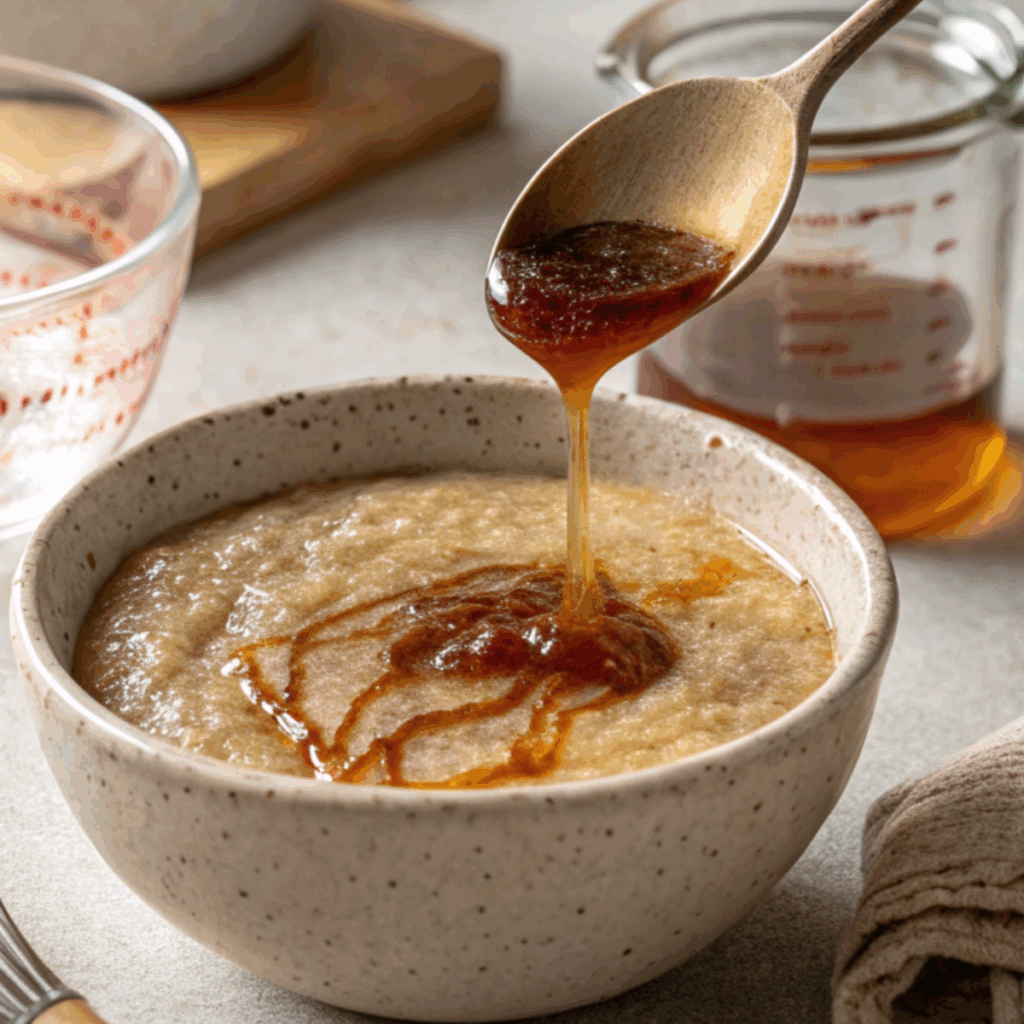
- Mix the Gel: Whisk psyllium husk, maple syrup, and 300g water until it gels. Let it sit while you prep the dry mix.
- Combine Dry Ingredients: In a large bowl or mixer, mix all flours, starches, and salt. Add any herbs or seasonings if using.
- Build the Dough: Whisk the gel and olive oil (if using) into the preferment. Add this wet mix to your dry ingredients. Mix until a soft, smooth dough forms. Knead briefly if needed.
- Shape & Proof: Form into a ball, then place in a well-floured banneton or towel-lined bowl, seam side up. Cover and proof 3–4 hours at room temp or overnight in the fridge.
- Bake the Loaf: Preheat oven to 425°F with a Dutch oven inside. When proofed, flip the dough onto parchment, score it deeply, and lower gently into the Dutch oven. Bake covered for 45 minutes, then uncovered for 25–40 minutes until golden brown.
- Cool & Store: Let the bread cool completely before slicing. Store in a bread bag for 2–3 days or freeze slices for easy toasting straight from the freezer.
Notes
- Flour Swaps: Stick to the total flour weight, but feel free to mix in whole grains like quinoa or millet. More starch = lighter texture; more whole grains = denser loaf.
- Loaf Pan Option: Shape dough into an oval and place seam-side down in an 8.5″ x 4.5″ loaf pan. Bake for 1 hour, then finish directly on the oven rack for 20 minutes.
- Fixing Gumminess: Try adding 10–20g extra flour or cutting water by 10–30g. If not using superfine rice flour, reduce water even more.
- Better Flours for Less Gumminess: Swap brown rice for oat, teff, buckwheat, or millet.
- Cooling Tip: After baking, let the loaf cool inside the turned-off oven (door cracked) for an hour to dry out excess moisture.
- Prep Time: 20 minutes
- Cook Time: 1 hour 20 minutes
- Category: Bread
- Method: Baking
- Cuisine: American
Nutrition
- Serving Size: 1 Slice
- Calories: 134 kcal
- Sugar: 1.2g
- Sodium: 392.2mg
- Fat: 1.4g
- Carbohydrates: 28.5g
- Fiber: 2.4g
- Protein: 1.9g
Best Gluten-Free Flours for Sourdough Bread 🌾
Building the perfect gluten-free sourdough bread starts with choosing the right flours. You need the structure of whole grains and the softness of starches. Balance is everything.
My Go-To Gluten-Free Blend:
- Brown rice flour – Light, neutral, and easy to ferment
- Sorghum flour – Adds depth and tenderness
- Tapioca or arrowroot – Bouncy, chewy texture
- Potato starch – Prevents heaviness
- Psyllium husk – Essential for that doughy structure
Want to avoid rice? Millet, oat, teff, and buckwheat are wonderful too. Just keep the total flour weight steady to maintain hydration.
Still wondering which flours make the best gluten-free sourdough? I’ve got you covered: the answer is yes! Each flour brings something to the table. It’s not about replacing wheat; it’s about rebuilding the character of sourdough in a way that’s uniquely gluten-free.
📌 Discover even more ideas with Whole Grain Sourdough Bread.
📌 Pair with: Sourdough Buns for a sandwich-friendly option.
The Foolproof Gluten-Free Sourdough Bread Recipe 🔥
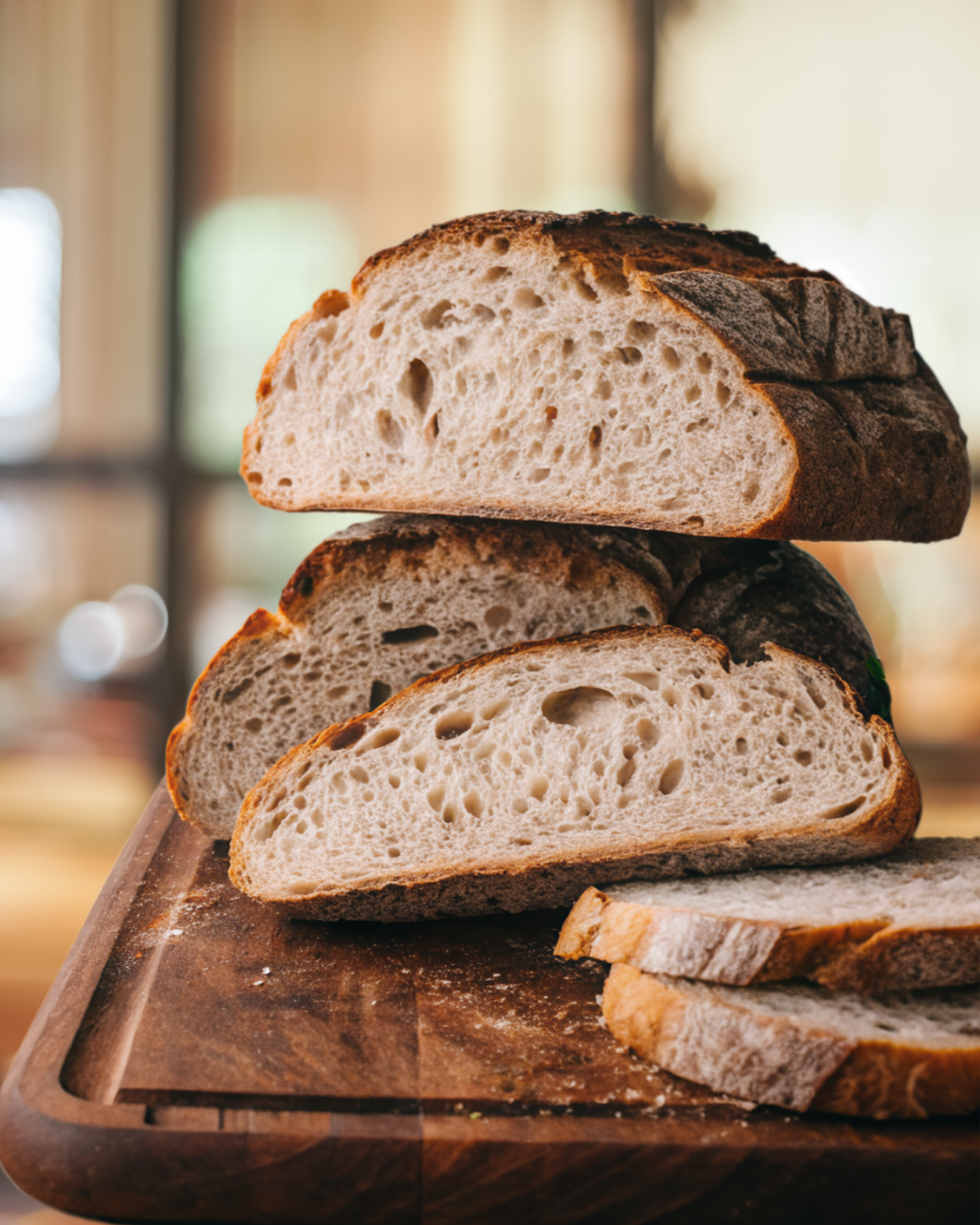
Now for the main event: a step-by-step gluten-free sourdough bread recipe that’s soft inside, crusty outside, and completely free of gluten and gums.
Ingredients (By Weight Only!) 🛒
Preferment:
- 150g active gluten-free starter
- 100g filtered water
- 80g superfine brown rice flour
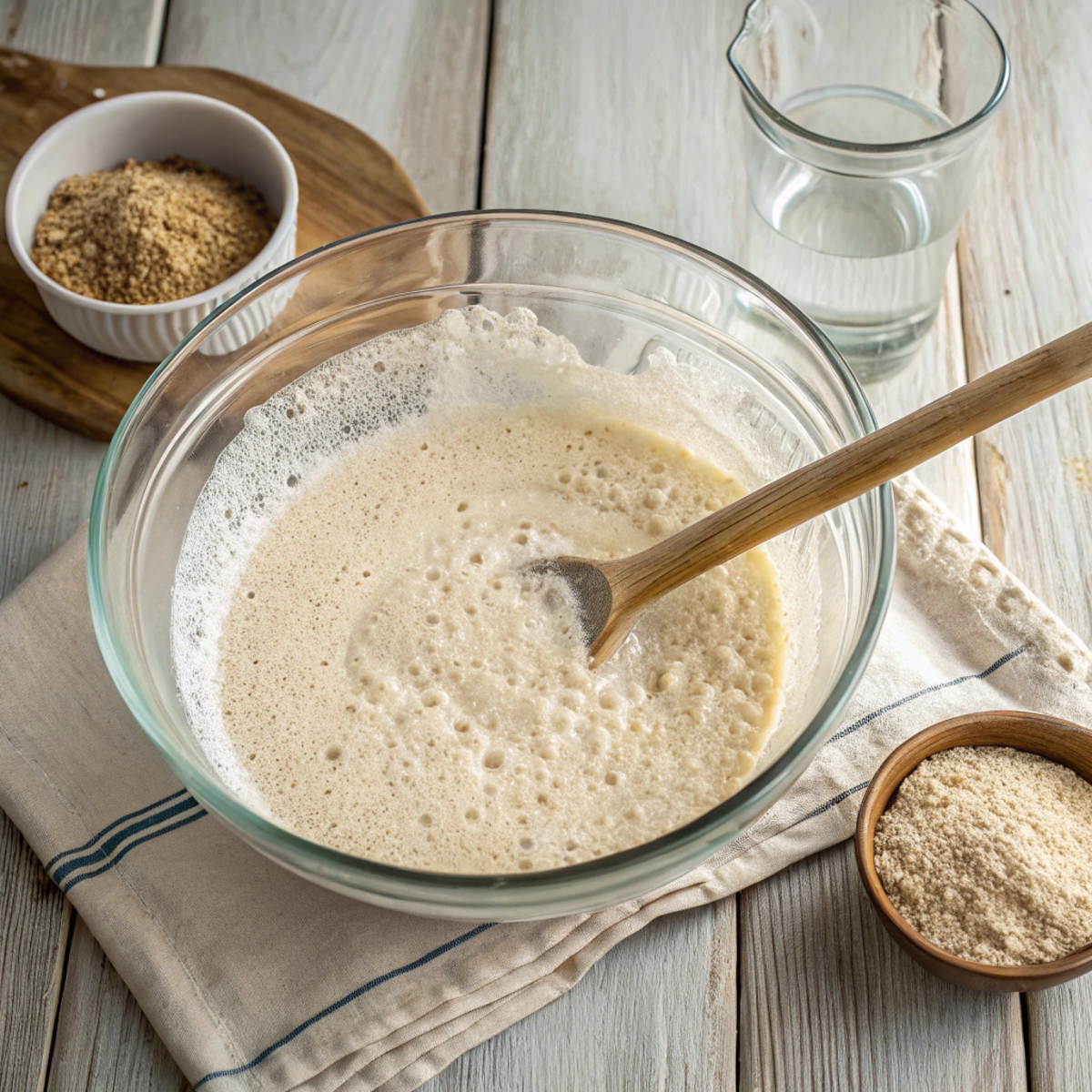
Gel Base:
- 20g whole psyllium husk
- 20g maple syrup
- 300g filtered water
Flour Mix:
- 80g potato starch
- 60g tapioca flour
- 80g sorghum flour
- 65–80g brown rice flour (adjust for moisture control)
- 12g sea salt
- 8–15g olive oil (optional, for softer crust)
Method 👩🍳
- Build the Preferment
Stir starter, water, and brown rice flour. Cover and let ferment for 4–18 hours. - Make Psyllium Gel
Whisk psyllium, syrup, and water. Let gel for 5 minutes. - Mix Flours
Toss all your dry ingredients into a big mixing bowl or the bowl of your stand mixer, whatever you’re working with. - Combine Wet + Dry
Add preferment and gel to flour. Mix until a smooth dough forms. - Shape and Proof
Shape into boule or oval. Place in a floured banneton. Let rise 4 hours (or overnight in fridge). - Bake
Preheat oven to 425°F with Dutch oven inside. Flip loaf onto parchment, score deeply.
Pop the dough into the oven and bake it with the lid on for 45 minutes. Then take the lid off and let it bake another 25 to 40 minutes, until the crust turns golden and gorgeous. - Cool Completely
Resist slicing hot! Let cool fully for best texture.
This technique gives you that honest-to-goodness gluten-free sourdough bread—crunchy on the outside, tender inside. Slice it up, toast it for breakfast, or freeze it for later. However you serve it, it’s always a win.
Trusted Tips from a Real Baker Who Lives Gluten-Free 👩🍳
As someone who’s baked gluten-free sourdough bread for over a decade in my Santa Rosa kitchen, I’ve tested endless combinations of whole flours, hydration ratios, and fermentation techniques. My pantry staples include certified gluten-free flours from trusted sources like Bob’s Red Mill and Anthony’s, and I always recommend using filtered water to protect your starter’s health. If you’re curious about other wholesome loaves, you might also love my whole grain sourdough bread—it’s a fantastic option if you’re balancing gluten-free and whole-food baking in one home.
Bethany’s Notes 🍞
- 🌡️ In warm climates, reduce your starter to 125g for better proofing control.
- 🍂 Try adding cinnamon, raisins, or pumpkin puree in the fall for a seasonal twist.
- 🌾 Not a fan of rice flour? Swap with oat, teff, or buckwheat for a more earthy flavor.
- 💧 Always use filtered water—chlorine can mess with your starter.
- 🛒 Find my favorite tools and ingredients in my gluten-free baking storefront.
Why This Recipe Works—And Keeps Working 🔬
This gluten-free sourdough bread recipe has been tested and tweaked across dozens of kitchens, climates, and baking skill levels. What makes it stand out is its real-world reliability, free from gums or synthetic binders. Natural ingredients like psyllium husk and slow fermentation do all the heavy lifting. Plus, for sweet-spiced loaf lovers, the method pairs beautifully with mix-ins like raisins or walnuts—check out the texture inspiration from our sourdough cinnamon raisin bread recipe. Whether you’re new or a seasoned baker, this guide helps you bake with confidence and care.
📌 Love dessert too? Try these Eggless Chocolate Chip Cookies after your baking adventure!
Gluten-Free vs. Traditional Sourdough: What’s the Real Difference?
Whether you’re new to sourdough baking or making the switch from wheat-based recipes, it helps to understand how gluten-free sourdough bread compares to the classic version. From flour choices to fermentation behavior, here’s how the two stack up side-by-side:
| Feature | Gluten-Free Sourdough | Traditional Sourdough |
|---|---|---|
| Flour Type | Sorghum, Rice, Tapioca, Oat | Wheat, Rye, Spelt |
| Fermentation Time | Often longer due to less active starches | Faster with strong gluten structure |
| Crumb Texture | Moist, dense, tender | Chewy, elastic, airy |
| Digestibility | Gentler for gluten-sensitive people | May still cause issues for those with gluten intolerance |
| Binders | Uses psyllium husk or chia/flax | Gluten provides natural binding |
For more recipes like gluten-free sourdough bread make sure to follow me on Pinterest.
🧠 FAQs
Is gluten-free sourdough bread possible?
Yes! With the right starter, flours, and psyllium husk, you can make gluten-free sourdough bread that tastes and feels authentic—without gums or additives.
What gluten-free flour is best for sourdough?
Sorghum, brown rice, and oat flour are popular choices. They offer great texture and ferment well. A mix with starches like tapioca or potato starch works best.
Can you buy sourdough gluten-free?
You can! But most store-bought options contain gums and additives. Homemade gluten-free sourdough bread is cleaner, tastier, and easier to digest.
Is sourdough bread healthier?
Yes, sourdough fermentation breaks down phytic acid and improves digestibility. Even in gluten-free sourdough bread, it can be gentler on the stomach and lower glycemic.
Where to buy gluten-free sourdough starter?
Many health food stores and online shops like Cultures for Health or Etsy offer gluten-free starters. Or, you can make your own from scratch at home using brown rice flour.